
What exactly is a self-introduction in an English essay?
It is not a dry list of facts; it is a miniature story that positions you in the reader’s mind. **The goal is to reveal character, values, and future direction in roughly 150–200 words.**
Why do most students sound robotic?
They copy templates and forget to **filter personal details through emotion**. Ask yourself: “What single moment made me proud, curious, or uncomfortable?” That moment becomes the narrative spine.
---How do I choose the opening hook?
Three reliable patterns:
- Snapshot: “At 6:03 a.m. the hospital corridor smelled of bleach and hope.”
- Contrast: “I love both differential equations and street dance—one seeks certainty, the other freedom.”
- Question: “What does a 3D printer have in common with my grandmother’s dumplings?”
What structure keeps the reader engaged?
Use a **micro-three-act shape**:
- Act I: 1–2 sentences of vivid context.
- Act II: 3–4 sentences of conflict or curiosity.
- Act III: 1–2 sentences that pivot to future contribution.
How can I show personality without sounding arrogant?
Replace adjectives with evidence. Instead of “I am hardworking,” write: “I rewrote the robot’s code at 2 a.m. after the motor melted.” **Let verbs carry the weight.**
---Which details should I leave out?
Anything that does not advance the story: your exact GPA, exhaustive award lists, or generic phrases like “team player.” **If a detail could belong to anyone, delete it.**
How do I handle cultural identity?
Frame it as a source of insight, not a barrier. Example: “Growing up in a bilingual home taught me that translation is not about words but about worlds.” **This turns background into transferable skill.**
---What tone fits an English essay?
Conversational yet precise. Read the draft aloud; if you would not say it to a respected teacher over coffee, **revise for natural cadence**.
---Can I use humor?
Yes, if it is self-aware and brief. A single witty clause can humanize you: “I bake brownies to bribe my physics group into tolerating my puns.”
---How do I close without clichés?
End with forward motion. Instead of “I hope to make a difference,” try: “Next year, I want to test whether recycled fishing nets can become violin strings.” **Specificity signals intent.**
---Sample 150-word self-introduction
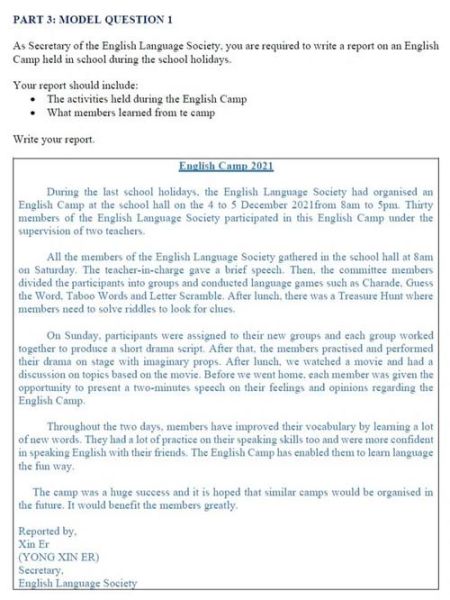
“The first time I soldered a circuit board, I set my sleeve on fire. While the polyester melted, my curiosity solidified. That small disaster in my grandfather’s garage led me to rebuild radios, then drones, and finally an app that maps air quality for Jakarta’s street vendors. Code, for me, is a second language that translates worry into action. At university, I plan to merge electrical engineering with policy courses to design sensors that not only collect data but also compel governments to listen. My sleeve has long been replaced, yet the spark remains.”
Checklist before submission
- Does the first sentence make the reader lean in?
- Have I replaced at least three adjectives with actions?
- Is the last sentence future-oriented?
- Read backward, sentence by sentence, to catch repetition.
Common pitfalls and quick fixes
Pitfall: Overloading with achievements.
Fix: Choose one award and dramatize the process behind it.
Pitfall: Using passive voice.
Fix: Change “The project was managed by me” to “I coordinated six teammates across three time zones.”
Pitfall: Generic closing.
Fix: Mention a lab, professor, or initiative by name to anchor your aspiration.
How long should the editing cycle be?
Minimum three passes: **substance edit** (content), **music edit** (rhythm), and **surgical edit** (word choice). Sleep between each pass; distance breeds clarity.
---Tools that sharpen prose
- Google Ngram: verify whether a phrase feels natural.
- Hemingway Editor: highlight dense sentences.
- Voice memo: record yourself, then transcribe to catch authentic phrasing.
Final thought
A self-introduction is not a confession booth or a trophy case; it is a **handshake in 150 words**. Make it firm, warm, and memorable.


还木有评论哦,快来抢沙发吧~