
What exactly is an English essay?
An English essay is a structured piece of writing that presents a clear argument or explores a topic through evidence, examples, and coherent reasoning. Unlike casual blog posts, it follows academic conventions: introduction, body paragraphs, and conclusion. **The core purpose is to persuade or inform the reader while demonstrating critical thinking.**
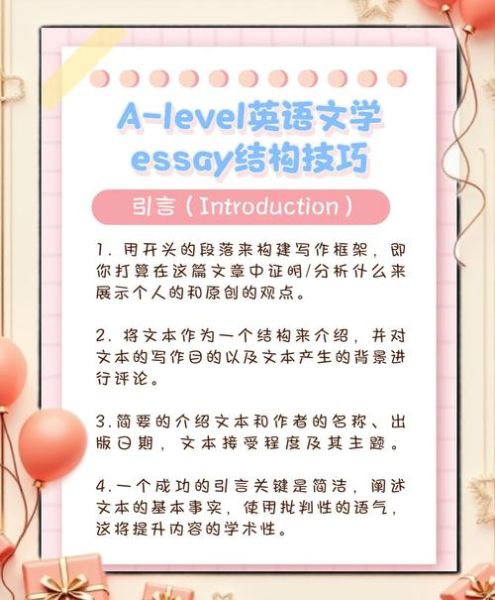
Why do students struggle most with the opening paragraph?
Most learners freeze at the first sentence because they try to sound profound. **Start with a hook that is simple yet intriguing:** a startling statistic, a brief anecdote, or a provocative question. For instance, “What if the books you read in childhood secretly shaped your political views?” instantly engages curiosity. Follow the hook with two or three sentences of context, then plant your thesis like a flag: “This essay argues that early exposure to dystopian fiction cultivates lifelong skepticism toward authority.”
---How do you build body paragraphs that actually flow?
Think of each paragraph as a mini-essay. Begin with a **topic sentence** that echoes one keyword from the thesis. Next, introduce evidence—quotations, data, or paraphrased ideas—then **analyze** it. Never drop a quote and run; explain how it proves your point. Finally, add a **transition** that glides to the next idea. A simple formula:
- Topic sentence: “Dystopian settings prime young readers to question propaganda.”
- Evidence: Orwell’s depiction of Newspeak in Nineteen Eighty-Four.
- Analysis: Shrinking vocabulary limits thought, teaching adolescents that language equals power.
- Transition: “This linguistic manipulation paves the way for broader distrust in institutions.”
What makes evidence credible and how much should you use?
Academic essays favor **primary sources** (novels, historical documents) and **peer-reviewed articles**. Aim for a 70/30 split: seventy percent your analysis, thirty percent direct evidence. Over-quoting drowns your voice; under-quoting looks unsupported. When in doubt, paraphrase complex ideas and reserve quotations for phrases too powerful to reword.
---How do you avoid sounding repetitive in longer papers?
Repetition creeps in when vocabulary is limited. Create a **synonym bank** while researching. If your thesis revolves around “skepticism,” alternate with “doubt,” “questioning,” or “critical distance.” Additionally, vary sentence openings: start with adverbs (“Curiously”), participial phrases (“Questioning every broadcast”), or prepositional phrases (“In the realm of politics”).
---Which transition words rescue choppy paragraphs?
Transitions act as bridges. Use:
- Contrast: however, nevertheless, on the contrary
- Cause-effect: consequently, therefore, as a result
- Sequence: subsequently, meanwhile, ultimately
Insert them at the start of sentences or after semicolons for smooth flow: “The regime censors media; consequently, citizens rely on underground pamphlets.”
---How do you craft a conclusion that feels fresh?
Avoid merely restating the thesis. Instead, **widen the lens**: connect your argument to a larger implication. If your essay proves that dystopian fiction breeds skepticism, conclude by asking whether today’s social media algorithms function as modern Newspeak. End with a call to awareness rather than a summary.
---What common grammar pitfalls sabotage clarity?
Three repeat offenders:
- Comma splices: joining two independent clauses with only a comma. Fix with a semicolon or conjunction.
- Vague pronouns: “This shows that…” Specify what “this” refers to.
- Misplaced modifiers: “Running quickly, the finish line seemed distant.” Rewrite: “Running quickly, she saw the finish line as distant.”
How can outlining save hours of rewriting?
Before typing, sketch a **skeleton outline**:
I. Hook & context
II. Thesis: dystopian fiction → skepticism
III. Body 1: language manipulation
IV. Body 2: unreliable narrators
V. Body 3: reader-response theory
VI. Conclusion: digital age parallels
This roadmap prevents tangents and ensures each paragraph advances the central claim.
What role does tone play in academic essays?
Maintain **formal yet accessible** tone. Replace contractions (“don’t”) with full forms (“do not”), but avoid archaic diction (“hitherto”). Use active voice: “The author argues” beats “It is argued by the author.” Confidence matters; hedge only when evidence is genuinely debatable: “This suggests” rather than “This might possibly indicate.”
---How do you integrate counterarguments gracefully?
Acknowledge opposing views to strengthen credibility. Dedicate one paragraph to a **counterargument**, then **refute** it. Example:
“Some claim that children read dystopian tales purely for entertainment. While escapism plays a role, classroom discussions reveal that students frequently draw parallels between fictional regimes and real-world policies, indicating deeper cognitive engagement.”
---Which digital tools polish the final draft?
- Grammarly: catches passive voice and comma splices.
- Hemingway Editor: highlights dense sentences.
- Zotero: manages citations in MLA, APA, or Chicago style.
Run each tool separately; over-reliance on automation can flatten your unique voice.
---How long should each drafting phase realistically take?
Break the timeline into **micro-deadlines**:
- Research & note-taking: 2 days
- Outline: 30 minutes
- First draft: 3 hours (write freely, ignore typos)
- Cool-off period: 24 hours
- Revision: 2 hours (structure, evidence)
- Proofreading: 45 minutes (grammar, formatting)
Spread across a week, the workload feels manageable and yields a sharper essay.





还木有评论哦,快来抢沙发吧~